So why does acrylic get a bad name?
Because it shares a shelf, in most minds, with disposable tat. Thin, scratched, yellowing plastic is what people picture. Thick cast acrylic sheet is a different thing: dense, glassy and heavy enough that people are surprised when they pick it up.
What can acrylic do that wood or brass can't?
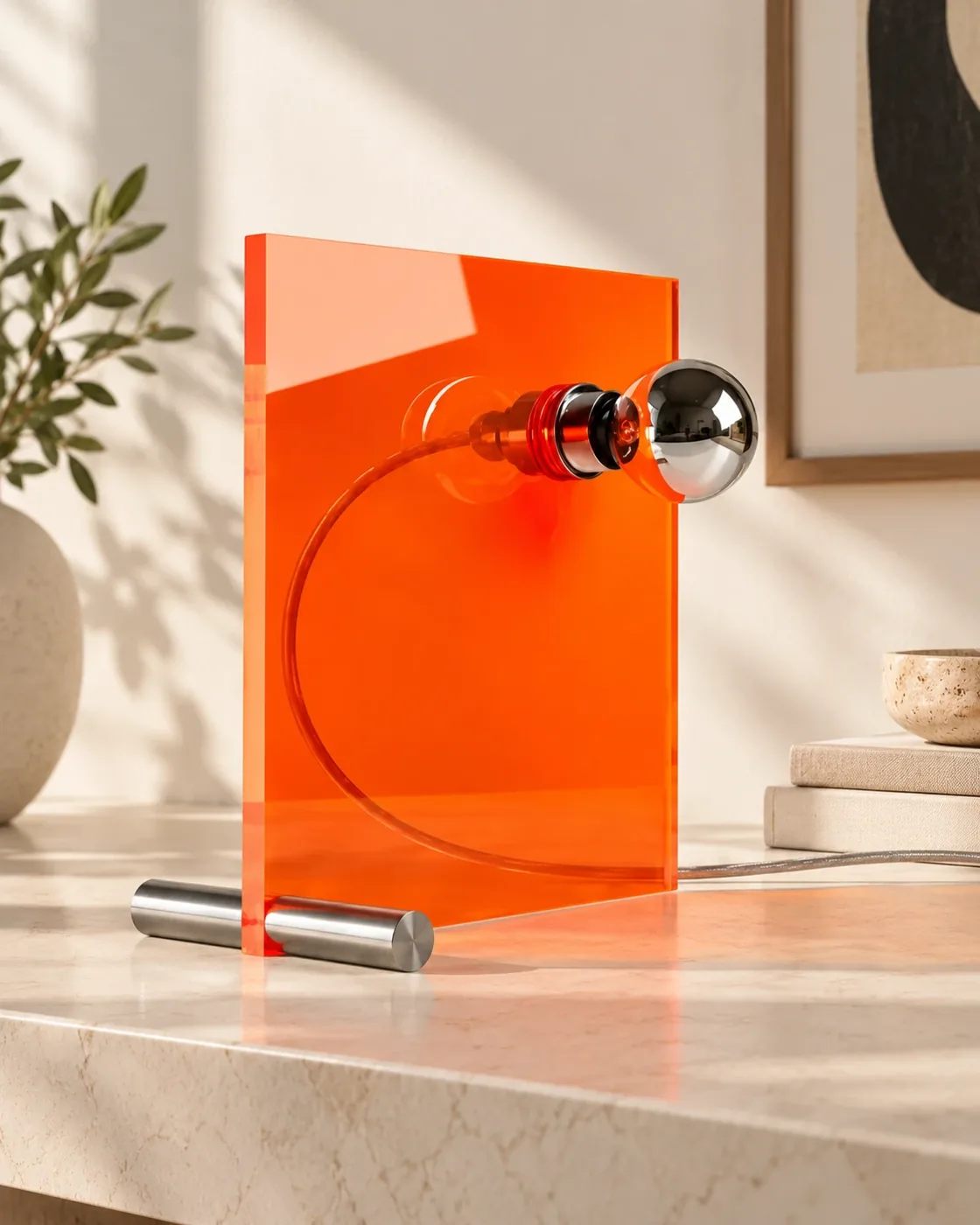
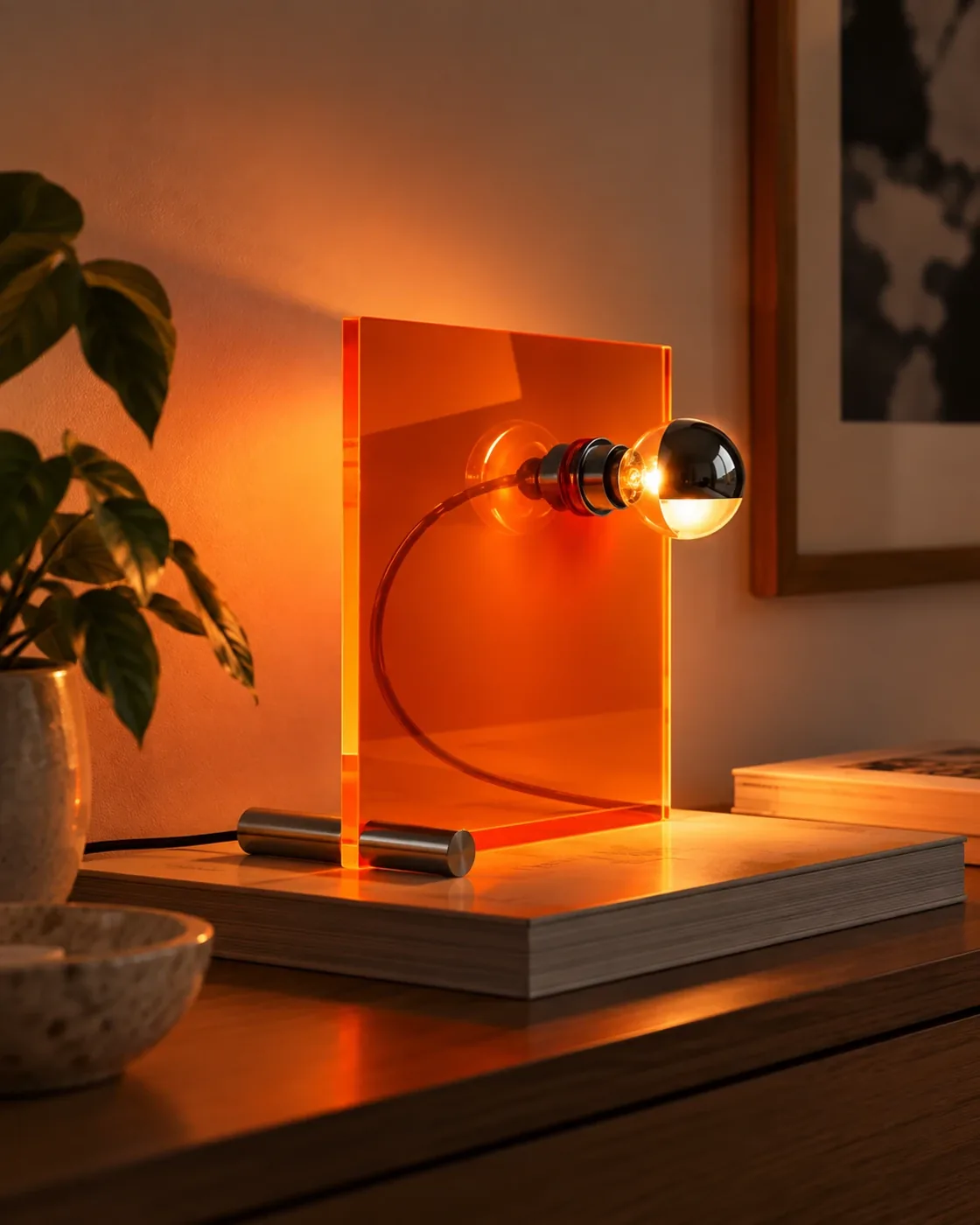
It carries colour all the way through, so there's no paint to chip. It glows at the cut edge, catching light and channelling it to the edges. And it can be translucent, so an acrylic object changes completely depending on what's behind it and what time of day it is.
That edge glow is the whole idea behind the Acrylic Lamp: a single 20 mm slab of fluorescent orange acrylic that lights up where the light catches it.
Is it hard to work with?
It fights back. It scratches. It melts if the laser lingers. It cracks if you drill it wrong. Test 04 was too red. Test 09 cracked at the corner. Test 14 was, finally, right. We came to acrylic from a signage workshop, so we've had years to learn its moods.
How do you clean acrylic without scratching it?
Use a soft cloth, slightly damp, and nothing abrasive: no scouring pads, no paper towels rubbed hard, no harsh cleaners. Dust it gently. That's all our acrylic pieces need.