Why start a design studio with a clock?
Every home has a clock. Almost nobody chose it. It came with the wall, or the wedding, or the hardware shop down the road, and now it just hangs there being correct.
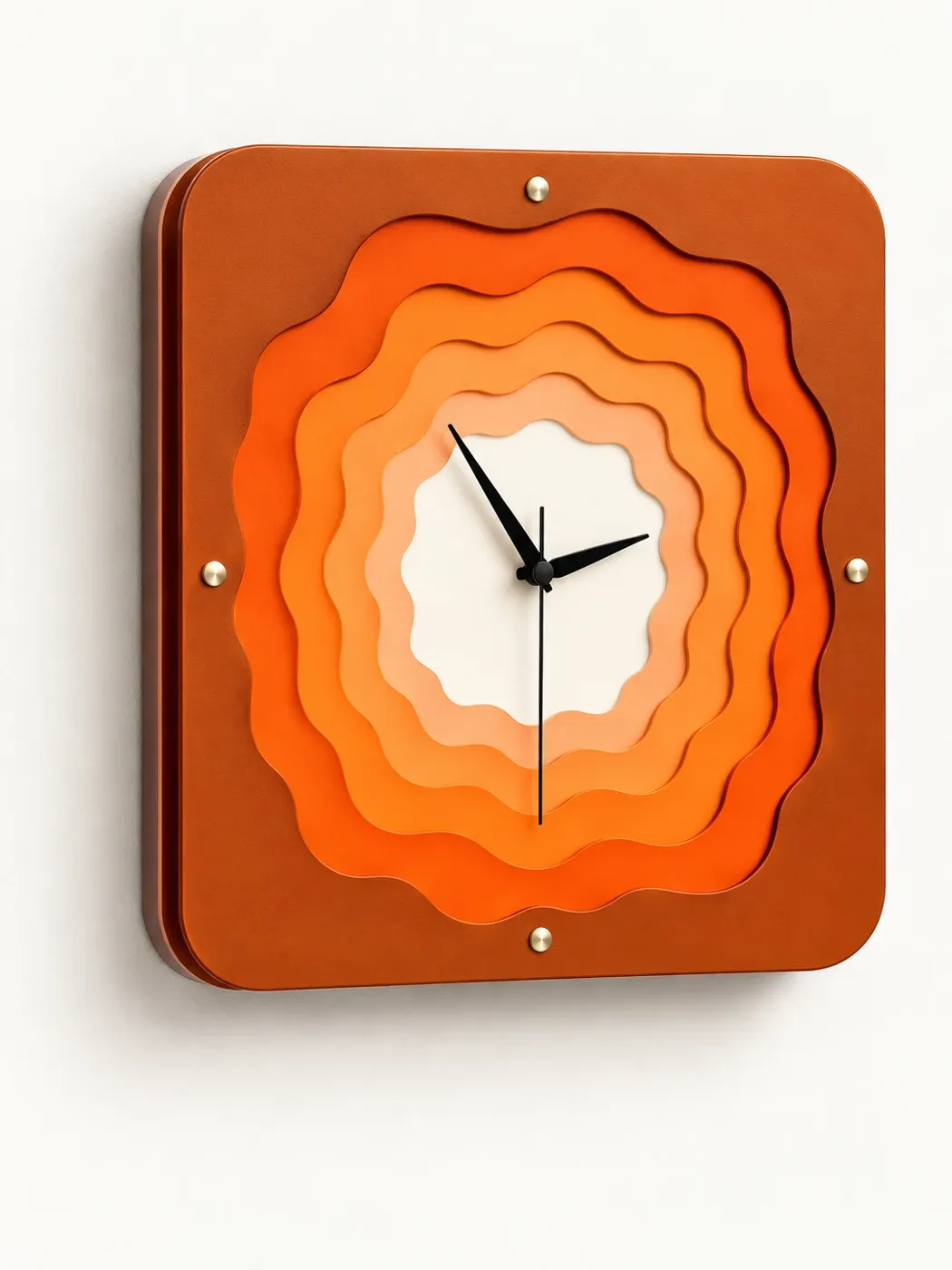
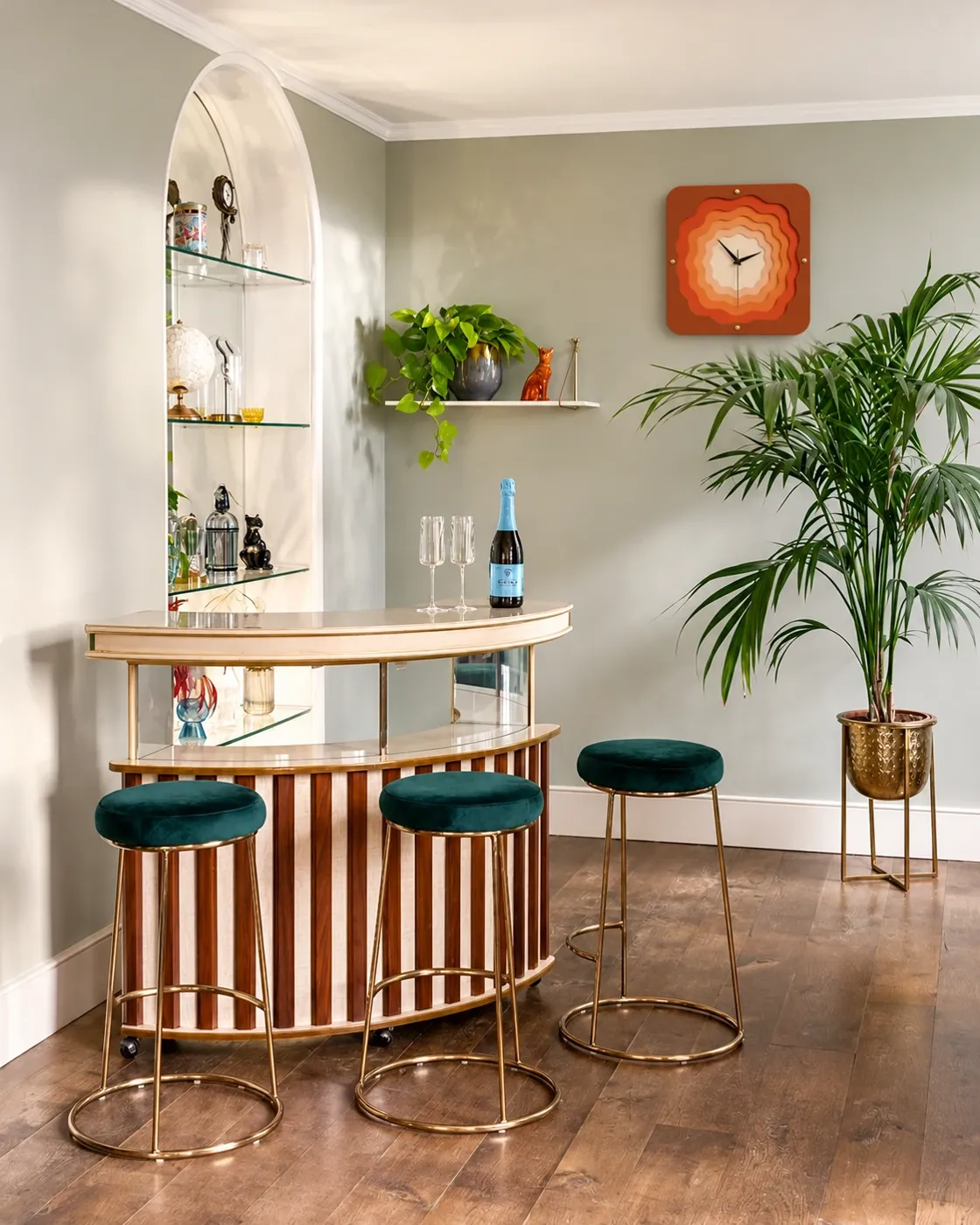
That's a strange thing for an object you look at fifty times a day. So the Layer Clock came first: not to reinvent timekeeping, but to make the glance worth something. It's built from stacked, wavy layers that step down into the dial, so the time sits at the bottom of a small warm crater.
What makes a wall clock easy to read?
Contrast and clear hands. A plain dial under bold hands beats a busy face with tiny numerals every time, and you don't actually need numbers at all: twelve o'clock, three, six and nine do the work. Both of ours keep the dial plain and let the hands do the talking.
Ticking or silent?
If the clock lives in a bedroom, study or anywhere quiet, choose a silent sweep movement: the second hand glides instead of stepping, so there's no tick. The Layer Clock and the Layered Wall Clock both use silent sweep movements.
What size wall clock do I need?
Hold a sheet of newspaper cut to the clock's size against the wall before you buy. Around 30 cm (the Layer Clock is 30 × 30 cm) sits well above a desk, a console or a kitchen counter. Around 34 cm (the Layered Wall Clock) holds its own on a bigger stretch of wall. On a really large wall, pair the clock with a frame or two rather than buying a giant clock.
Which of our clocks should I pick?
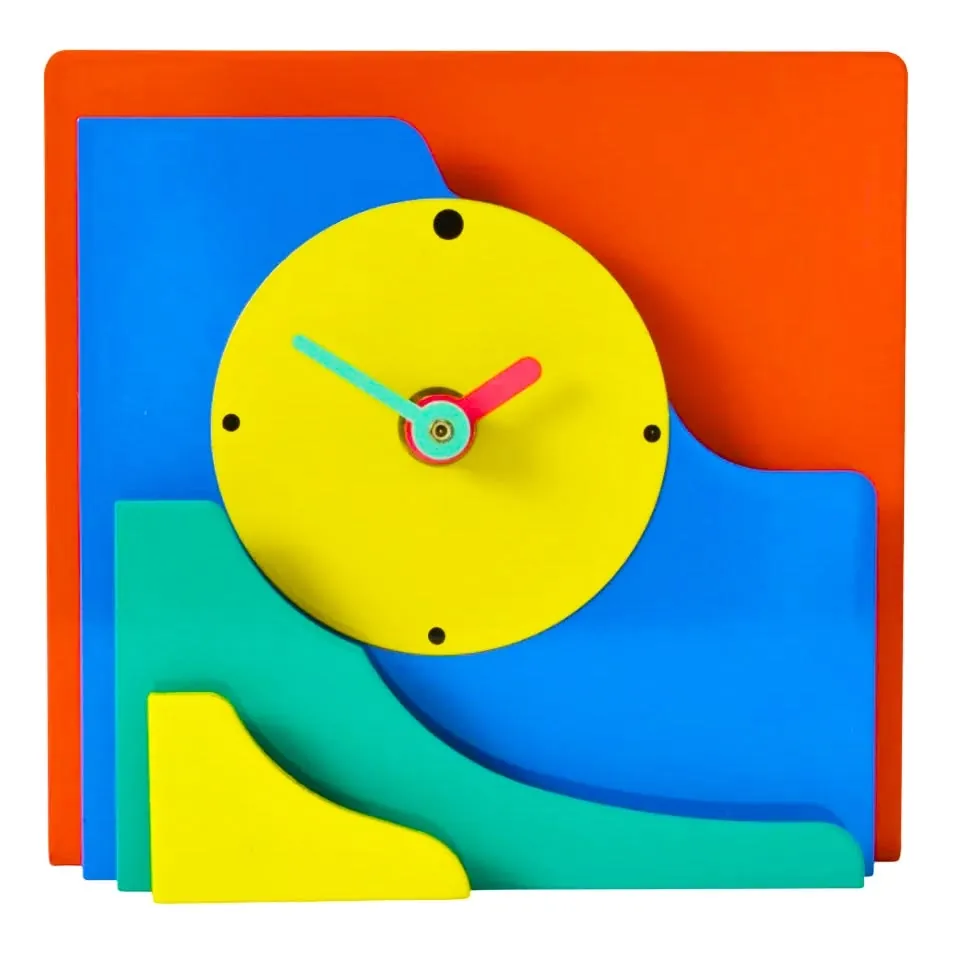
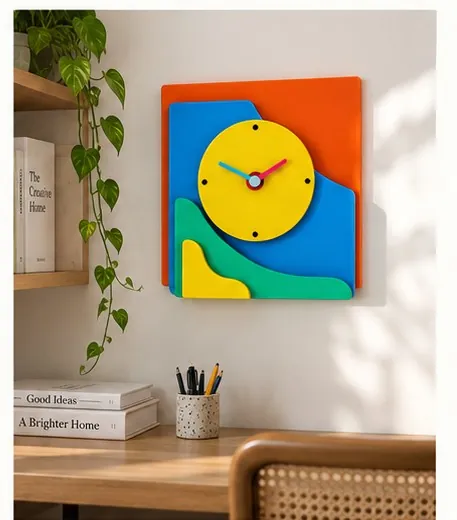
The Layer Clock (coming soon) is the warm, calm one: a terracotta-to-orange gradient in layered MDF and acrylic. The Layered Wall Clock (coming soon) is the loud one: overlapping primary-colour acrylic shapes with a floating yellow dial, part clock, part small painting. Both are made to order in Bengaluru and dispatched within 10 working days.